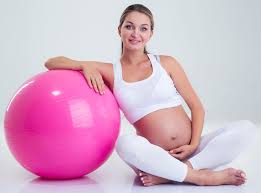
Using a birth ball during the third trimester can help ease common pregnancy discomforts like back pain and hip pain. It promotes better posture, pelvic mobility, and relaxation, all of which can contribute to a smoother labor and delivery experience. It’s a gentle way to stay active and comfortable.
What is a Birth Ball?
A birth ball is basically a large, inflatable exercise ball. Think of a yoga ball or stability ball you might see at a gym. They come in different sizes.
You inflate them to a specific firmness. They are designed to be strong and safe for exercises. For pregnant people, they offer a unique way to sit and move.
Unlike a chair, the ball lets you wiggle and sway. This movement is gentle. It can help relieve pressure.
It also encourages good posture. You can use it for sitting, bouncing, and gentle exercises.
The main idea is movement. Pregnancy changes how you move. Your center of gravity shifts.
Your body gets heavier. This can strain your back and hips. A birth ball allows for natural, fluid movements.
These movements mimic the natural rocking and swaying that can help babies move into the best position. It’s like giving your pelvis a gentle massage from the inside. This makes it a helpful tool for many.
Why Use a Birth Ball in Your Third Trimester?
The third trimester is a time of major change. Your baby is growing fast. You’re likely feeling the weight of it all.
Back pain is super common. Hip pain can start to creep in too. Your pelvis might feel tight or sore.
You might also find it hard to get comfortable. Sitting in chairs can feel stiff. Sleeping can be a challenge.
The birth ball comes into play here.
It offers a supportive, yet flexible, surface. When you sit on it, your body naturally adjusts. You tend to sit up straighter.
This helps open up your chest. It can take pressure off your lower back. The gentle rocking motion also helps.
It can ease tension in your hips and pelvis. This is important as your body gets ready for labor. A more mobile pelvis can help your baby descend.
It can also make labor more manageable.
Many women find that just sitting on the ball and doing gentle movements helps them relax. The rhythmic motion can be calming. It’s a way to connect with your body.
It’s also a way to prepare for the physical demands of labor. You’re building strength and flexibility. You’re also learning to listen to your body’s signals.
This makes it more than just a piece of equipment. It becomes a partner in your pregnancy journey.
Personal Experience: The Night the Back Pain Won
I remember being about 36 weeks pregnant with my second child. The back pain had become unbearable. I’d tried everything my doctor suggested.
Prenatal massages felt great but didn’t last. I was sitting on the couch, trying to work on my laptop. Every little shift sent a sharp pain through my lower back.
I felt stuck. My usual chairs felt like torture devices. I was getting frustrated and worried.
Would this pain ever stop? Would labor even be possible if I felt this bad all the time?
My midwife had mentioned a birth ball a few times. I’d seen them around but hadn’t really thought much of it. That night, as the pain peaked, I remembered.
I had one tucked away in a closet. I pulled it out, feeling a bit skeptical. It looked like a giant beach ball.
I inflated it as best I could. Then, I tentatively sat down. I let myself sink into it.
Slowly, I started to rock. Back and forth. Side to side.
It felt… different. The pressure on my lower back eased. The ball molded to my shape.
It gave me support without being rigid. I rocked for maybe ten minutes. The sharp pain didn’t vanish completely.
But it dulled. I could actually move without wincing. It was a small relief, but it felt huge.
That night, the birth ball went from being a ‘nice to have’ to a ‘must-have’.
Ball Sizes and How to Choose Yours
The Right Fit Matters: Picking the correct size birth ball is key. It ensures safety and effectiveness. A ball that’s too big or too small can cause strain.
It can also make exercises harder.
General Guide:
- 55 cm: Best for people around 5’0″ to 5’6″ tall.
- 65 cm: Ideal for those around 5’7″ to 6’0″ tall.
- 75 cm: Suitable for people over 6’0″ tall.
How to Test: When sitting on the inflated ball, your hips should be level with or slightly higher than your knees. Your thighs should be parallel to the floor. Your feet should be flat on the ground.
You should feel balanced and stable.
Check the Weight Limit: Ensure the ball can support your weight plus any added weight during exercises. Most quality birth balls handle up to 600-1000 pounds.
Core Benefits for the Third Trimester Mama
The third trimester brings unique challenges. Your body is preparing for birth. Your baby is growing and taking up space.
This can lead to discomfort. The birth ball offers solutions. It helps in several key ways.
These benefits are why so many pregnant people embrace it.
First, it’s great for your posture. As your belly grows, it’s easy to arch your back. This can cause pain.
Sitting on the ball encourages you to sit up tall. It naturally aligns your spine. Your shoulders relax.
This can reduce strain on your back muscles. Good posture is important for breathing too. It makes it easier to fill your lungs.
Second, it increases pelvic mobility. Your pelvis needs to be able to open and move. This helps your baby get into the right position for birth.
It also helps the baby pass through the birth canal. The gentle bouncing and swaying motions on the ball help loosen the pelvic joints. It releases tension in the pelvic floor.
This makes the whole area more flexible. This is super important as labor approaches.
Third, it can relieve back and hip pain. This is a huge one for many. The ball provides a soft, supportive surface.
It takes pressure off sensitive areas. The rocking and swaying motions act like a gentle massage. They can soothe sore muscles.
They can increase blood flow. This helps reduce stiffness and pain. Many women find relief just by sitting on it.
Others find relief doing specific exercises.
Fourth, it helps with relaxation and stress. Pregnancy can be stressful. The third trimester brings anticipation and sometimes anxiety.
The rhythmic movement of the ball can be very calming. It’s like a natural way to meditate. Focusing on the gentle motion can take your mind off worries.
It helps you connect with your body. It promotes a sense of peace. This can be incredibly beneficial.
Finally, it can help baby get into position. Gentle movements on the ball can encourage the baby to move lower into your pelvis. This is called fetal engagement.
It also helps the baby get into the optimal head-down position. This is ideal for a vaginal birth. The rocking helps create space in the pelvis.
It might encourage the baby to find the best spot.
Contrast Matrix: Myth vs. Reality of Birth Balls
Myth
Birth balls are only for exercise.
You need to do complex moves.
They are unsafe for pregnant people.
They will make you fall.
Reality
They are great for comfortable sitting and gentle rocking.
Simple movements like swaying are very effective.
When used correctly, they are very safe and supportive.
With proper setup, they are stable and secure.
Simple Exercises to Try at Home
You don’t need to be an athlete to use a birth ball. The best exercises are often the simplest. They focus on gentle movement and relieving pressure.
Always listen to your body. Stop if anything feels wrong.
Pelvic Tilts
This is a fantastic exercise. It helps relieve lower back pressure. It also encourages pelvic mobility.
- Sit on your birth ball with your feet flat on the floor.
- Your knees should be bent at about 90 degrees.
- Keep your back straight and your posture tall.
- Now, gently rock your pelvis forward. This arches your lower back slightly.
- Then, gently rock your pelvis backward. This flattens your back against the ball.
- Repeat this motion slowly and rhythmically.
- Focus on engaging your abdominal muscles.
- Do this for 5-10 minutes at a time.
Gentle Bouncing / Wiggles
This is perhaps the most popular use. It feels good!
- Sit on the ball with feet flat and knees bent.
- Keep your back upright.
- Start with small, gentle bounces straight up and down.
- Let your hips move up and down with the ball.
- As you get comfortable, you can try gentle hip circles.
- Move your hips in a figure-eight motion.
- Then try side-to-side sways.
- Let your hips move from side to side.
- These movements help loosen your hips and pelvis.
- Do this for as long as it feels comfortable.
Seated Hip Abduction
This can help strengthen your hip muscles.
- Sit on the ball with feet flat on the floor.
- Place your hands on your hips or the ball.
- Slowly spread your knees apart, away from each other.
- You should feel a gentle stretch in your inner thighs.
- Then, slowly bring your knees back together.
- Repeat 10-15 times.
- This movement helps open the pelvis.
Supported Squats
Squats are great for labor. The ball offers support.
- Stand with your back to the birth ball.
- Place the ball against a wall for stability.
- Lean your back against the ball.
- Place your feet shoulder-width apart.
- Slowly bend your knees and lower your hips as if sitting in a chair.
- Go down as far as is comfortable.
- Keep your back straight and your chest up.
- Push back up to the starting position.
- Repeat 10-15 times.
- This helps open the pelvis and build leg strength.
Quick-Scan Table: When to Use Your Birth Ball
| Activity | Benefit | Notes |
|---|---|---|
| Sitting during work/rest | Improves posture, relieves back pressure | Gentle rocking is best. |
| Gentle bouncing | Eases hip tension, encourages baby’s descent | Keep movements slow and controlled. |
| Pelvic tilts | Relieves lower back pain, mobilizes pelvis | Focus on smooth, rhythmic movement. |
| Supported stretches | Opens hips, strengthens legs | Listen to your body; avoid overstretching. |
Real-World Context: Where and Why It Helps
Let’s talk about where you might use this ball and why it makes sense in everyday life. Many pregnant women spend a lot of time sitting. This is true if they work at a desk.
It’s also true if they are resting at home. Chairs can become uncomfortable. They don’t allow for much movement.
This can lead to stiffness and pain. The birth ball changes this.
In your home, you can swap out your desk chair for the ball. You can use it while watching TV. You can use it while reading.
Even just sitting on it and swaying gently can make a big difference. The movement is natural. It mimics the rocking a baby often likes.
It helps your body stay limber. This is especially important in the third trimester.
Consider your body’s changes. Your center of gravity shifts forward. This puts extra strain on your lower back.
Your pelvis also widens. This can cause discomfort. The ball helps by providing a stable base.
It allows your pelvis to move freely. This takes pressure off your joints. It can help align your spine better.
Think about the birth itself. Labor is hard work. Your body needs to be able to move.
It needs to be able to open up. The birth ball trains your body for this. The movements you do now can help prepare you for labor positions.
Squats, for instance, are very helpful for labor. Using the ball to support yourself makes them more accessible. The rocking motions can also help you get used to the feeling of movement during contractions.
It’s not just about physical comfort. It’s also about mental preparation. The rhythmic movement can be very grounding.
It helps you focus on your breath. It can help you feel more in tune with your body. This can reduce anxiety.
It builds confidence. You are actively doing something to prepare.
Observational Flow: How a Birth Ball Session Might Look
1. Set Up: Inflate the ball to the correct firmness. Ensure it’s stable.
Place it on a non-slip surface.
2. Sit Down Gently: Approach the ball from behind. Sit down slowly.
Find your balance. Your feet should be flat on the floor.
3. Gentle Rocking: Begin with slow, small forward and backward movements. Feel your pelvis tilt.
Then, try side-to-side sways. Just feel the movement.
4. Hip Circles: If comfortable, make slow circles with your hips. Imagine drawing a circle on the floor.
5. Deep Breaths: Take a moment to breathe deeply. Feel your chest expand.
Notice how the ball supports you.
6. Stand Up Slowly: When you’re done, place your hands on the ball or floor. Slowly bring yourself up.
7. Short Sessions: Start with just a few minutes. Gradually increase the time as you feel more comfortable.
What This Means for You: Normal Discomfort vs. When to Worry
It’s important to know when your discomfort is normal pregnancy stuff. And when it might be something more. The birth ball can help with many normal issues.
But it’s not a cure-all. It’s a tool to help you feel better.
When Birth Ball Use is Likely Helpful:
- General Backaches: If you have achy back pain that feels better with movement.
- Hip Stiffness: If your hips feel tight and sore.
- Poor Posture: If you tend to slouch.
- Restlessness: If you have trouble getting comfortable sitting or resting.
- Feeling “Stuck”: If you want to help your baby get into a good position.
- General Discomfort: If you just feel heavy and a bit achy.
These are common third-trimester experiences. The birth ball can provide relief and support. It encourages gentle movement.
It helps you relax. It can make sitting more bearable. It can also help you feel more in control of your comfort.
When to Be Cautious or Seek Advice:
- Sharp, Sudden Pain: If you experience any sudden, severe pain, stop. Consult your doctor or midwife. This could be a sign of something more serious.
- Leg Swelling or Pain: If you have significant swelling or pain in one leg, especially with redness or warmth. This could indicate a blood clot. Seek immediate medical attention.
- Decreased Fetal Movement: If you notice a significant decrease in your baby’s movements. This is always a reason to contact your care provider right away.
- Dizziness or Nausea: If any ball activity makes you feel dizzy or sick. Stop and rest.
- Pelvic Pain with Certain Movements: If specific movements on the ball cause sharp, shooting pelvic pain. Your body might not be ready for that movement.
- Pre-existing Conditions: If you have any pre-existing medical conditions (like high blood pressure or balance issues). Always talk to your doctor before starting new activities.
The birth ball is a wonderful tool. But your health and your baby’s health come first. Always trust your instincts.
If something feels off, get it checked out. Your healthcare provider is your best resource.
Stacked Micro-Sections: Safety First
Inflate Properly: A ball that is too soft offers little support. One that is too firm can be uncomfortable. Aim for hips level with or slightly above knees.
Stable Surface: Use the ball on a rug or non-slip mat. Avoid slippery floors.
Hands Nearby: Keep your hands on your knees or the floor when sitting. This helps with balance.
Gradual Movements: Start slow. Don’t force any movements. Listen to your body’s signals.
Stop if Painful: Any sharp or concerning pain means you should stop immediately.
Quick Fixes and Tips for Optimal Use
Getting the most out of your birth ball is easy with a few tips. It’s about making it a helpful part of your day.
- Start Small: Don’t feel like you need to spend hours on the ball. Even 5-10 minutes a few times a day can make a difference.
- Make it Accessible: Keep the ball where you’ll use it. If it’s in the living room, you’ll use it more.
- Listen to Your Body: This is the most important tip. If a movement feels bad, don’t do it. Find something else.
- Stay Hydrated: Always drink water after any gentle exercise.
- Keep it Clean: Wipe down your ball regularly with mild soap and water.
- Check for Leaks: Before each use, give the ball a quick check for any signs of wear or damage.
- Combine with Breathing: As you do your movements, focus on your breath. This enhances relaxation.
- Don’t Over-Inflate: The ball should have a little give. If it’s rock hard, it won’t mold to your body well.
- Feet Flat: Always keep your feet flat on the floor when sitting. This provides a stable base.
These small adjustments can make a big impact. They help you use the ball safely and effectively. They turn a simple tool into a powerful comfort aid.
Frequently Asked Questions about Birth Balls
When can I start using a birth ball?
You can start using a birth ball any time during your pregnancy. Many women find them most helpful in the second and third trimesters. When you’re feeling more discomfort.
It’s always a good idea to check with your doctor or midwife first.
How long should I sit on the ball each day?
There’s no strict rule. Start with short periods, like 5-10 minutes. You can gradually increase this as you feel comfortable.
Listen to your body. If you feel tired, take a break. Many women use it on and off throughout the day for comfort.
Can the ball help with labor pain?
Yes, many women find the birth ball helpful during labor. The rhythmic movement can help manage contractions. It can help ease back pain during labor.
It also helps keep the pelvis open and mobile. It’s a great tool for labor positions.
What if I feel unstable on the ball?
Ensure the ball is inflated correctly. Your feet should be flat on the floor. Your knees should be at a 90-degree angle.
Keep your back straight. If you still feel unstable, try placing your hands on your knees or the floor for more support. You can also try it near a wall for extra stability.
Can I use a regular exercise ball?
Yes, most regular exercise balls or yoga balls are suitable. Just make sure it’s a good quality, sturdy ball. Check the weight limit.
Ensure it’s the right size for you. The term ‘birth ball’ often just refers to an exercise ball used for pregnancy and labor.
How do I know if the ball is properly inflated?
When you sit on the ball, your hips should be level with or slightly higher than your knees. Your thighs should be parallel to the floor. Your feet should be flat on the ground.
The ball should have a little give when you press it, but not be squishy.
Will using a birth ball guarantee a smooth labor?
While a birth ball can significantly help ease discomfort and prepare your body, it doesn’t guarantee a specific birth outcome. Every pregnancy and labor is unique. It’s a supportive tool to help you feel your best and be more comfortable.
Conclusion: Your Comfort Partner
The third trimester is a time of anticipation. It can also bring discomfort. Your birth ball can be a simple yet powerful ally.
It helps you move more freely. It eases common aches. It helps your body prepare for birth.
Remember to choose the right size. Use it safely. Listen to your body always.
This gentle tool can bring much-needed comfort and ease.