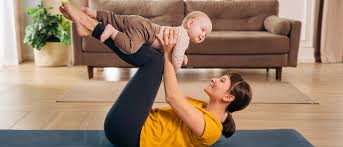
Gentle postpartum exercises focus on safe, gradual movement to aid physical recovery after childbirth. These activities help rebuild core strength, improve flexibility, and reduce discomfort without overexerting the healing body. It’s about listening to your body and progressing slowly to support long-term wellness.
Understanding Your Postpartum Body
After giving birth, your body changes a lot. Your belly muscles may be stretched. Your pelvic floor needs attention.
You might feel tired. You might have aches and pains. This is all normal.
Your body needs time to mend. It worked hard for nine months. Then it did amazing work during labor.
Hormones are also shifting. This affects how you feel. It also affects your body’s ability to heal.
Think of it like a marathon runner. After a big race, they don’t just jump back into training. They rest.
They do light stretching. They eat well. Your body is like that runner.
It needs careful care to recover. Pushing too hard too soon can cause problems. It can lead to pain or injury.
It can also set back your progress. That’s why gentle postpartum exercises are so important. They are designed for your healing body.
When Can You Start Exercising After Birth?
This is a common question for new moms. The answer is not one-size-fits-all. It really depends on how you gave birth.
It also depends on your body. It depends on how you are feeling. Your doctor or midwife is your best guide here.
They know your medical history. They know how your birth went.
For most vaginal births without complications, many doctors say you can start light walking within days. This is just easy walking. It’s not a workout.
For C-sections, recovery takes longer. Your doctor will give you specific advice. They might say wait 6 to 8 weeks.
Always follow their advice. Your body knows best.
Listen to your body’s signals. If something hurts, stop. You might feel tired.
That’s okay. Rest is part of recovery too. It’s better to start slow.
You can always do more later. Building up slowly is safer. It helps you avoid setbacks.
It helps you feel good about your progress.
Some very light exercises can start even sooner. Think deep breathing. Think gentle pelvic tilts.
These can help activate muscles. They don’t put much strain on your body. But always ask your doctor first.
They can help you know what’s safe for you. They can make sure you start on the right foot.
Signs It’s Okay to Start Gentle Movement
Listen to Your Body: You feel ready. You are not in too much pain.
Doctor’s Approval: Your healthcare provider says it’s safe.
Basic Daily Tasks: You can do everyday things like walking to the mailbox without feeling exhausted.
No Heavy Bleeding: Your bleeding has slowed down considerably. Strenuous activity can increase bleeding.
Core and Pelvic Floor: Your Healing Foundation
Your core muscles are your abdominal muscles. Your pelvic floor is a group of muscles. They support your bladder, uterus, and bowels.
Childbirth stresses these areas. Rebuilding strength here is crucial. It helps with back pain.
It helps with bladder control. It also helps your body feel more stable.
Diastasis Recti: This is a common condition. It’s when the two sides of your abdominal muscles separate. This happens due to the growing uterus.
Gentle exercises can help these muscles come back together. But some exercises can make it worse. It’s important to know which ones are safe.
We’ll talk about those soon.
Pelvic Floor Muscles: These muscles can be stretched or injured during birth. They need careful attention. Re-training them is vital.
It helps prevent leaks. It supports your organs. They are like the foundation of your house.
A strong foundation means a stable home. Your body needs a strong pelvic floor foundation.
Many postpartum exercises focus on these areas. They are gentle. They are effective.
They work with your body’s healing process. Don’t worry if you can’t feel your muscles working at first. It takes time and practice.
Be patient with yourself. Consistency is more important than intensity.
Gentle Postpartum Exercises to Try
When you get the okay from your doctor, you can start incorporating some movements. These are designed to be safe for your healing body. They focus on rebuilding strength gently.
They also help improve your overall well-being. Remember to breathe. Breathing is a big part of these exercises.
1. Deep Belly Breathing
This is a great starting point. It helps you reconnect with your core. It’s very calming too.
Lie on your back. Bend your knees. Place your hands on your belly.
Breathe in slowly through your nose. Feel your belly rise under your hands. Your chest should move very little.
Breathe out slowly through your mouth. Feel your belly fall. Do this for a few minutes.
Try to do it several times a day.
2. Pelvic Tilts
These help with lower back pain. They also engage your core and pelvic floor. Lie on your back.
Bend your knees. Feet flat on the floor. Gently flatten your lower back against the floor.
Imagine you are tucking your tailbone slightly. You should feel your abdominal muscles tighten a little. Hold for a few seconds.
Then release. This is a small movement. Don’t force it.
Do about 10 repetitions. You can do these often.
Quick Scan: Core & Pelvic Floor Basics
| Exercise Type | Why It Helps | How to Do It (Briefly) |
|---|---|---|
| Deep Breathing | Calms nerves, starts core connection | Inhale belly rise, exhale belly fall |
| Pelvic Tilts | Relieves back pain, gently engages core | Flatten back to floor, release |
| Kegels | Strengthens pelvic floor muscles | Squeeze as if stopping urine flow |
| Transverse Abdominis (TA) Activation | Supports core stability | Draw belly button to spine |
3. Kegel Exercises
These are for your pelvic floor muscles. They are super important. To do a Kegel, imagine you are trying to stop the flow of urine.
Or imagine you are trying to stop passing gas. Squeeze those muscles. Hold for a few seconds.
Then relax them completely. You can do Kegels anywhere. Do them while sitting or standing.
Start with holding for 3 seconds, then relaxing for 3 seconds. Work up to holding longer. Try to do 10-15 repetitions.
Do this a few times a day.
Important: Don’t do Kegels while you are actually urinating. This can be confusing for your muscles. It can also interfere with bladder emptying.
Focus on the SQUEEZE and RELAX. You should feel a lifting sensation. It’s about control.
Many women find they need to re-learn how to do them. Be patient.
4. Transverse Abdominis (TA) Activation
This is your deepest abdominal muscle. It acts like a corset. It supports your spine and organs.
Lie on your back with knees bent. Breathe out. As you exhale, gently draw your belly button in towards your spine.
Imagine you are tightening a corset. You should feel a slight tension deep in your belly. Don’t hold your breath.
Don’t suck in your stomach hard. It’s a subtle, deep contraction. Hold for a few seconds.
Then relax. Do about 10-15 repetitions. This can be done lying down, sitting, or standing.
This TA activation is fundamental. It’s the first step to rebuilding a strong, functional core. Many postpartum core exercises build upon this.
Without this deep connection, you might accidentally make diastasis recti worse. This gentle contraction is safe and effective. It’s a building block.
5. Cat-Cow Stretch
This is a gentle yoga pose. It helps with spine flexibility. It also warms up your core.
Start on your hands and knees. Your hands should be under your shoulders. Your knees should be under your hips.
As you inhale, drop your belly towards the floor. Lift your chest and tailbone. This is the “cow” pose.
As you exhale, round your spine towards the ceiling. Tuck your chin and tailbone. This is the “cat” pose.
Move slowly with your breath. Do about 5-10 cycles of this stretch. It feels really good on your back.
This movement helps to gently mobilize your spine. It encourages awareness of your core muscles. It’s a safe way to start moving your torso.
The linking of breath to movement is very calming. It can help ease tension. It’s also a great way to gauge your comfort level.
Split Insight: What NOT to Do Early On
Avoid Traditional Crunches/Sit-ups: These can worsen diastasis recti.
Avoid Heavy Lifting: Give your body time to heal from strain.
Avoid High-Impact Activities: Jumping, running, etc., are for much later.
Avoid Holding Your Breath: Proper breathing is crucial for core engagement.
Avoid Overdoing It: Listen to your body and rest when needed.
6. Wall Push-Ups
As you get stronger, you can try wall push-ups. Stand facing a wall. Place your hands on the wall slightly wider than shoulder-width apart.
Step your feet back a little. Keep your body in a straight line from head to heels. Bend your elbows to lower your chest towards the wall.
Keep your core engaged. Push back to the starting position. Do 10-15 repetitions.
This is a modified push-up. It’s much safer than floor push-ups.
This exercise helps build upper body strength. It’s important for holding and carrying your baby. It also helps with posture.
Start with a few repetitions. Gradually increase as you feel stronger. You can move your feet further from the wall to make it harder.
Or move closer to make it easier.
7. Glute Bridges
These strengthen your glutes and hamstrings. They also help activate your pelvic floor. Lie on your back with knees bent.
Feet flat on the floor, hip-width apart. Engage your pelvic floor and TA muscles. Lift your hips off the floor.
Squeeze your glutes at the top. Keep your upper back and shoulders on the floor. Lower slowly.
Do 10-15 repetitions. This is a fantastic exercise for rebuilding lower body strength.
Glutes are important for supporting your pelvis. They help with walking and standing. Strong glutes can help reduce back pain.
They also help with regaining a functional gait. This exercise is also good for counteracting the effects of sitting a lot, which many new mothers do.
Story Time: My Own Postpartum Fitness Journey
I remember feeling so lost after my first baby. Everyone told me to rest. And I did.
But I also felt this restless energy. My body felt weak. My back ached from nursing.
I wanted to feel like myself again. But I was so scared of hurting myself. The internet was full of conflicting advice.
One day, my physical therapist showed me how to do a pelvic tilt. It was such a tiny movement. I almost laughed.
But I did it. Then she showed me the TA pull. It felt like I was learning to use my body again.
I started doing them every morning. Just a few minutes. Slowly, I noticed a difference.
My back didn’t ache as much. I felt a little more stable.
Then came the day I tried a wall push-up. I was so shaky. I could only do five.
I felt so weak. But I didn’t give up. I kept doing my little exercises.
Over weeks and months, I built up. I felt stronger. I felt more confident.
It wasn’t about fitting into old clothes. It was about feeling capable in my own body. It was about healing from the inside out.
That gentle start made all the difference.
Infographic Style: Building Blocks of Postpartum Fitness
Step 1: Breath & Awareness
Focus on deep belly breathing and gentle pelvic tilts. This wakes up your core.
Step 2: Deep Core Connection
Practice transverse abdominis (TA) activation and Kegels. This builds your foundation.
Step 3: Gentle Movement
Incorporate cat-cow stretches and glute bridges. This adds flexibility and lower body strength.
Step 4: Functional Strength
Try wall push-ups and modified squats. This prepares you for daily tasks.
Step 5: Gradual Progression
Listen to your body. Slowly increase reps, sets, or duration. Add new safe exercises.
Real-World Context: Your Daily Life
Think about your day as a new mom. You are lifting, carrying, and bending constantly. You pick up your baby.
You push a stroller. You reach for things on high shelves. You might even be sitting on the floor to play.
All these actions use your core and pelvic floor muscles.
If these muscles are weak, other parts of your body have to compensate. This can lead to strain. It can cause pain in your back, hips, or knees.
It can also contribute to issues like incontinence. Doing gentle postpartum exercises prepares your body for these demands. It makes everyday tasks easier.
Consider your posture. You might be hunched over nursing or rocking your baby. This can strain your upper back and neck.
Exercises that strengthen your back muscles and improve shoulder mobility can help. Things like gentle rows or chest stretches can be beneficial as you progress.
The environment also matters. If you have stairs, you’ll be using your legs and core more. If you have a garden, you’ll be bending and lifting.
Your postpartum fitness should support your life. It’s not about looking a certain way. It’s about feeling strong and capable.
It’s about being able to enjoy your baby without being held back by pain or weakness.
Observational Flow: Postpartum Recovery Milestones
Week 1-2: Focus on breathing, gentle pelvic tilts, and Kegels. Prioritize rest. Listen to your body.
Week 2-4: Add TA activation, cat-cow stretches, and glute bridges. Start short walks if approved.
Week 4-6: Introduce wall push-ups and basic squats. Increase duration of walks. Monitor for any pain or discomfort.
Week 6-8 (or later for C-section): If cleared by doctor, can gradually add more challenging exercises. Consider joining a postpartum fitness class. Keep listening to your body.
What This Means For You: When is it Normal? When to Worry?
It’s completely normal to feel weak or sore after childbirth. It’s normal for your tummy muscles to feel different. It’s normal to have some leaking when you cough or sneeze at first.
Many women experience these things. The goal is to gently improve over time.
However, there are signs that suggest you should seek professional help. If you have sharp or severe pain during any movement, stop and consult your doctor or a pelvic floor physical therapist. If you experience heavy vaginal bleeding that increases with activity, that’s a sign to back off and rest.
If you have pain when urinating, or a strong urge to urinate that you can’t control, see your doctor.
Regarding diastasis recti, if you notice a bulging or doming in your abdomen when you do certain movements, especially anything that involves flexing your abs, you might need to adjust your exercises. This is a sign that those specific movements might be too much. A pelvic floor physical therapist can assess your diastasis recti and give you personalized exercises.
They can help you heal it effectively.
If you feel dizzy, nauseous, or unwell during or after exercise, that’s your body telling you it’s too much. Rest is key. Don’t push through significant discomfort or pain.
Your postpartum recovery is a marathon, not a sprint. Celebrate small victories. Every little bit of movement counts.
Quick Fixes & Tips for Staying Active
Getting back into exercise postpartum isn’t always easy. It’s about making it work for your new life. Here are some tips to help you stay active.
- Start with short bursts. You don’t need an hour. Five minutes here, ten minutes there. It all adds up.
- Involve your baby. Walks in the stroller are great. You can also do some seated exercises while holding your baby.
- Schedule it in. Treat your exercise time like an appointment. Put it on your calendar.
- Find a friend. If possible, team up with another new mom. You can encourage each other.
- Be patient and kind to yourself. Your body just did an amazing thing. It needs time to heal and regain strength.
- Stay hydrated. Drink plenty of water throughout the day.
- Focus on nutrition. Eating well supports your body’s healing and energy levels.
- Listen to your body. This is the most important tip. Rest when you need to.
Don’t compare your journey to others. Every woman’s postpartum experience is different. What works for one might not work for another.
The goal is safe, sustainable movement that supports your recovery and well-being. This includes your mental health too. Exercise can be a great stress reliever.
Frequent Questions About Gentle Postpartum Exercises
Can I do yoga after giving birth?
Gentle, postpartum-specific yoga classes can be very beneficial. These classes are designed for healing bodies. They focus on safe poses and breathing.
Avoid intense or hot yoga until much later and with doctor approval. Always inform your instructor that you are postpartum.
How soon can I do squats after a vaginal birth?
You can start very basic squats as soon as you feel ready and get doctor approval, often within a few weeks. Focus on form: keep your chest up, core engaged, and knees tracking over your toes. Start with just bodyweight.
If you have pelvic floor issues, get guidance from a pelvic floor therapist.
What if I can’t feel my Kegel muscles working?
This is common. Sometimes muscles need to be re-taught. Try lying down first.
Focus on the sensation. Imagine squeezing to stop urine or gas. If you still can’t feel it, a pelvic floor physical therapist can help.
They can use biofeedback to help you find the muscles.
Is it safe to exercise if I’m still bleeding?
Light exercise like walking or gentle breathing is usually okay if your bleeding is light. However, strenuous exercise can increase bleeding. Always check with your doctor.
If your bleeding increases significantly with activity, stop and rest. It’s best to wait until bleeding has significantly reduced or stopped.
How long does it take to recover my core strength?
Core recovery varies greatly. Some women feel a good connection within a few weeks. For others, it takes months.
It depends on your pre-pregnancy fitness, the birth, and your consistency with exercises. Patience is key. Focus on steady progress, not speed.
What are the signs of a worsening diastasis recti?
Signs include a visible bulge or “doming” in your abdomen when you strain or move certain ways. You might also feel a lack of support in your core or experience increased back pain. If you notice these, it’s important to see a healthcare professional, like a pelvic floor physical therapist.
Conclusion
Your postpartum recovery is a sacred time. Gentle exercise is a gift you can give your body. It helps you heal.
It helps you regain strength. It boosts your energy. Remember to listen to your body.
Always get clearance from your doctor. Be patient. Celebrate every step of your healing journey.
You’ve got this.